
I’ve said it before, and I’ll say it again… holidays matter on The Memory Unit. Most of us have been celebrating the same holidays (with usually the same traditions) our whole life. Using activities that tap into these long-term memories and feel-good emotions are some of the best ways to boost engagement when working with individuals living with dementia. And we’re all about maximizing quality of life over here!
Whether you’re a Therapist or a Life Enrichment Director, these Independence Day ideas are made for you!
Create Your Own Fireworks
Real sparklers and fireworks are likely against the safety code of your facility (you know, probably). But these tissue paper fireworks are super cute, can be used to decorate the unit, and can be modified to meet any Resident’s cognitive and therapeutic needs.

Set Out a Patriotic Puzzle
Setting out a holiday-themed puzzle that Residents can come and go to, and that you as a therapist can integrate into your sessions, can be a great way to keep the holiday theme present throughout the weeks leading up to and during the holiday. This one is cute 500 piece puzzle that I believe will appeal to the masses.
Prepare a Festive Snack
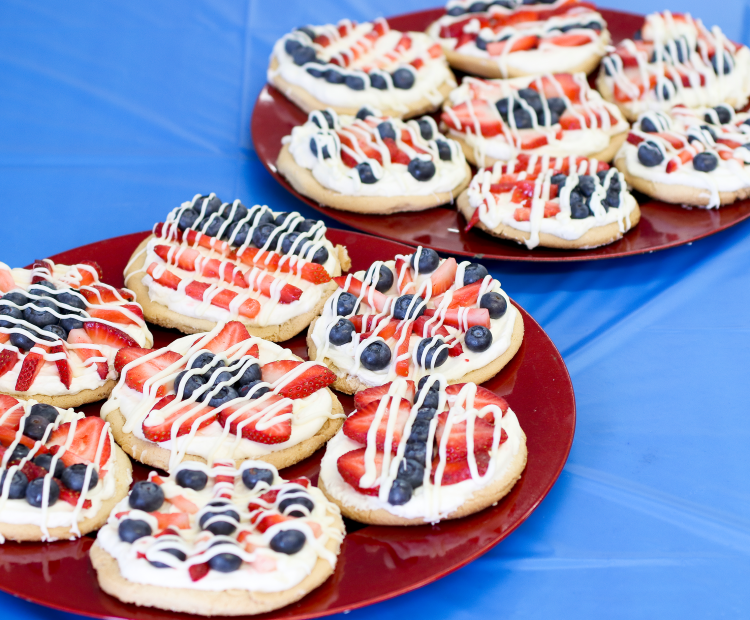
Cooking groups and activities are some of the best ways to address cognition. There is so much involved; sequencing, short-term recall, attention, safety, problem solving. Creating a fun, holiday-themed snack will get Residents both oriented to and excited about the upcoming holiday. These Patriotic Fruit Pizzas are super cute, and can be easily created over the course of several sessions.
Put on a Parade
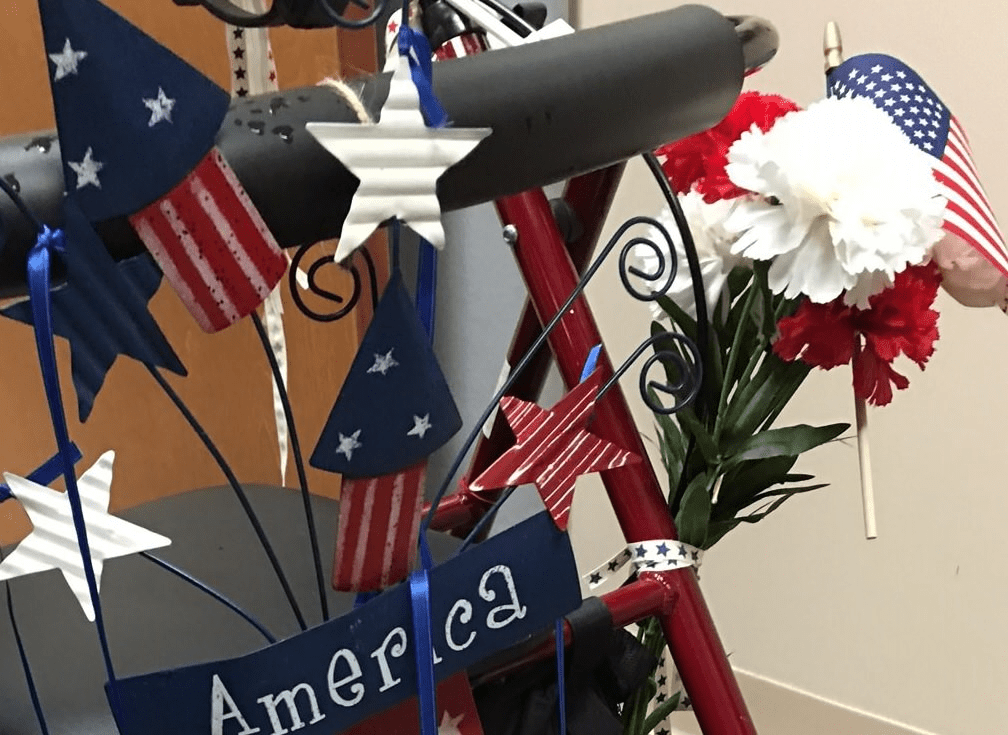
Grab a bunch of streamers, tassels, bells, banners, and flags and have fun decorating everyone’s walkers and wheelchairs. Then put on a parade around the parking lot or facility. Make it a full occasion and invite families and friends to join. Then gather together for a cookout meal afterwards.
Hold an Outdoor Cook-Out
Collaborate with the Dietary Department to host an outdoor cookout for lunch. Try and offer all the classic foods; hamburgers and hotdogs, pasta salad, watermelon, and ice cream for dessert. Inviting friends and family to join will make it extra special!
Now, let’s talk about making this skilled.
As with any intervention, you have to use your Activity Analysis skills. So the key questions you need to ask yourself:
- Why am I doing this with my Resident?
- What deficit’s or needs do they continue to show?
- What goals have I (or the OTR) written in the care plan?
- How can this activity address those needs and goals?
Your Resident might need to address community setting tolerance for safety and emotional regulation.
Literally any of these activities will address that. The focus will be on maximizing the Resident’s ability to easily transition to the task and remain in the activity for the duration. Document how many cues are required to initiate/transition to the activity and how long the Resident could tolerate the activity before self-terminating.
Your Resident might need to address cognitive function such as direction following, sequencing, problem solving, etc.
Again, most of these activities will address that. The focus will be on maximizing these skills, as evidenced by an ability to complete the task with the least amount of cues. Document how much cueing was required for each step of the task, how much assist was required for each step of the task, the aspects of the task that were the easiest, the aspects that were the most challenging, and any other notable behaviors.
Your Resident might need to address standing, balance, and mobility.
The obvious intervention idea for these skills is the parade. Puzzles can always be completed in standing. You could also create the paper fireworks while standing, and work together to find spots on the unit to place them as decoration. Or perform the cooking task in standing and then deliver the completed treat to others throughout the unit.
When documenting these mobility tasks, you’ll want to include standing balance grades, the amount of rest breaks, the amount of physical assist and cues provided, as well as the cognitive attention demonstration throughout and the ability to tolerate the task as a whole.
I hope these ideas spark the creative juices for you if you’re feeling stuck! Pop off in the comments with other ideas and beloved therapy activities!
related posts





 The Memory Unit OT
Leave a comment