We’ve been talking about how to modify our assessments techniques in order to effectively evaluate individuals with dementia/memory impairment. Just to recap, this means modifying what we do in order to fit the emotional and cognitive needs of our patients, instead of expecting them to modify their behaviors in order to fit the standard evaluation mold.
But what about the fact that we’re supposed to do standardized testing, not to mention most documentation software requires a test score as part of a completed evaluation?
I’ve got 3 favorites that I’ve used the most and also seen other therapists use the most in all the buildings I’ve worked in.
The Montreal Cognitive Assessment.
This is a questionnaire-style assessment that looks at multiple areas of cognitive function. Each section/area is given a score; all area scores are added together to give a final score out of 30 possible points. I really like this assessment because it looks at multiple areas of cognition. It’s a great place to start during initial evaluation to get a general overview of structured activity tolerance as well as problem solving and direction following. Because this is a questionnaire-style assessment, it can be challenging for individuals with dementia, and may result in increased emotional distress mid-test. I try to simply re-assure my patients that they just need to do the best they can, and if they can’t answer a question it’s okay. While missed questions do hurt the overall score, the data collected during the assessment can be very helpful when meeting with interdisciplinary teams to discuss deficits and areas for more support.
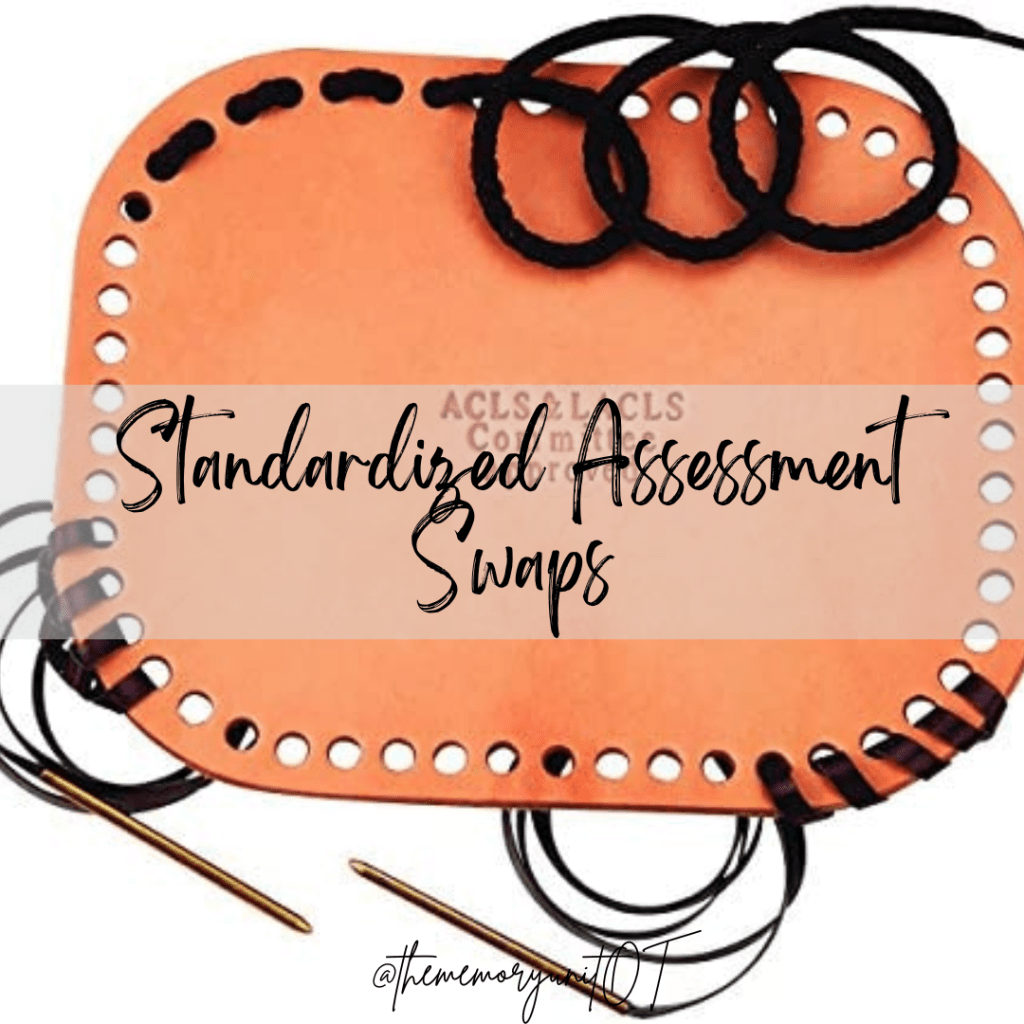
The Allen’s Cognitive Levels Screen.
This a leather-lacing tool designed to assess problem solving and direction following. The screen is scored based on patient performance, and each score is associated with a cognitive level. I find that because it is more task-based, individuals with dementia tend to tolerate this assessment better. I find it also doesn’t feel so much like a test in the way that the MOCA can feel like a test. The other great thing about this assessment is the amount of information and resources available discussing each cognitive level and how to treat individuals with each score. This is especially helpful when discussing recommended supports and assists to families and for advocating for patients within the interdisciplinary setting.
The BERG Balance Scale.
This is a balance scale that assesses various aspects of dynamic balance to reveal a final score. Scores are then broken down into a balance deficit severity level (including recommendations or use of an assistive device). I like using this with individuals with neurocognitive impairment because many of the tasks on this assessment are highly functional and things you would likely observe someone performing during daily tasks, making it easier to score.
What are your favorite assessments to use with older adults?





 The Memory Unit OT
Leave a reply to Q&A Part II – The Memory Unit OT Cancel reply